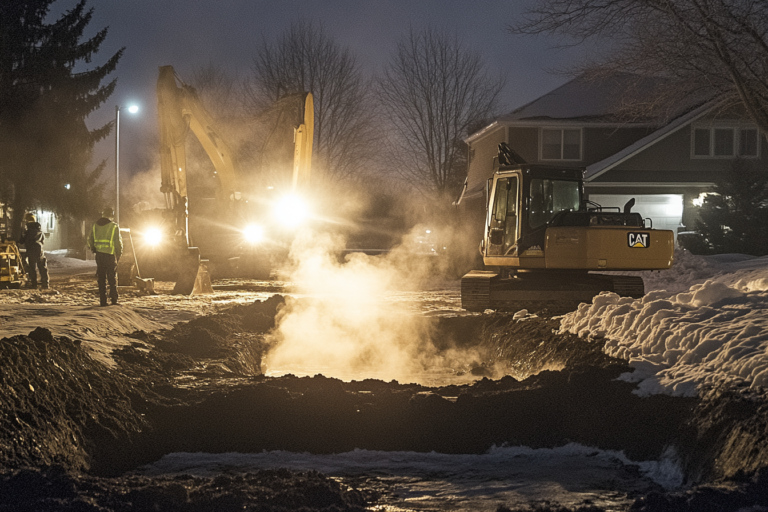
Forward-thinking stormwater planning keeps Exterior drainage homes and businesses dry, safe, and efficient.
When spring storms barrel across Exterior drainage, the difference between a resilient property and a soggy disaster often comes down to how well water is directed away from structures. Residents along Route 24 and business owners near Main Street have learned that reactive fixes simply can’t keep up with the area’s clay-heavy soils and flash-flood tendencies. Instead, a proactive, engineered approach to Exterior drainage protects foundations, parking lots, and landscaping from slow, costly damage.
Modern Exterior drainage planning starts with mapping every slope, gutter, and utility corridor. A professional assessment identifies whether downspouts discharge too close to footings, if French drains are undersized, or if a commercial water main repair inadvertently disrupted soil grading. Because the Susquehanna watershed funnels so much water through Harford and Baltimore counties, even a small miscalculation can create saturated lawns or icy sidewalks in winter. Property owners who invest in a comprehensive exterior drainage audit not only reduce liability but also extend the life of concrete pads, retaining walls, and underground utilities.
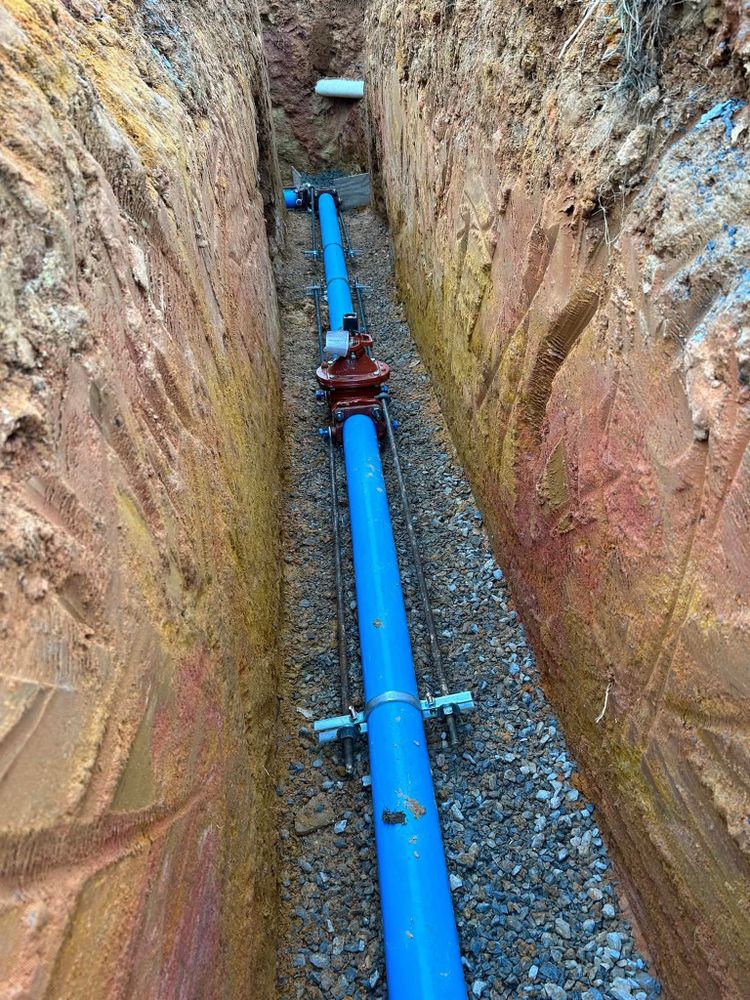
The photo above is a reminder that high-performing drainage is more than a trench and some gravel. Skilled crews understand how to combine perforated piping, filter fabrics, and clean-outs so that maintenance remains straightforward for years. In Exterior drainage neighborhoods with mature trees, root intrusion is a common reason systems fail early. Installing access points for hydro-jetting and scheduling annual inspections prevents backups that could otherwise lead to basement flooding or water-main pressure drops.
Don’t overlook surface grading. One of the most frequent calls from Exterior drainage homeowners involves patio pavers or sidewalks that collect puddles. In many cases, the sub-base has settled, causing water to run back toward the foundation. Re-grading doesn’t always require a full tear-out; sometimes a swale or berm can nudge runoff toward a collection trench. For commercial lots, adding porous asphalt, channel drains across loading docks, or catch basins at the base of ramps often resolves chronic pooling.
Another Exterior drainage essential is coordinating drainage upgrades with utility projects. If a water main installation is on the horizon, it’s smart to plan exterior drainage improvements at the same time. Shared excavation reduces costs, and crews can install conduits, sump discharge lines, or sensor cables before backfilling. Pairing smart meters with moisture sensors gives facilities managers real-time alerts when groundwater rises unexpectedly, helping them differentiate between a natural storm surge and a leaking service line.
Landscaping choices also influence how well Exterior drainage performs. Deep-rooted native grasses near Edgewood, rain gardens along Bynum Run, and permeable pavers in densely built business parks all slow water long enough for soils to absorb it. Conversely, compacted lawns and decorative rock beds without underdrains can accelerate runoff, overwhelming nearby storm inlets. Landscape architects working in Exterior drainage frequently collaborate with drainage specialists to integrate bioswales, cisterns, and irrigation tie-ins that reuse captured rainwater.
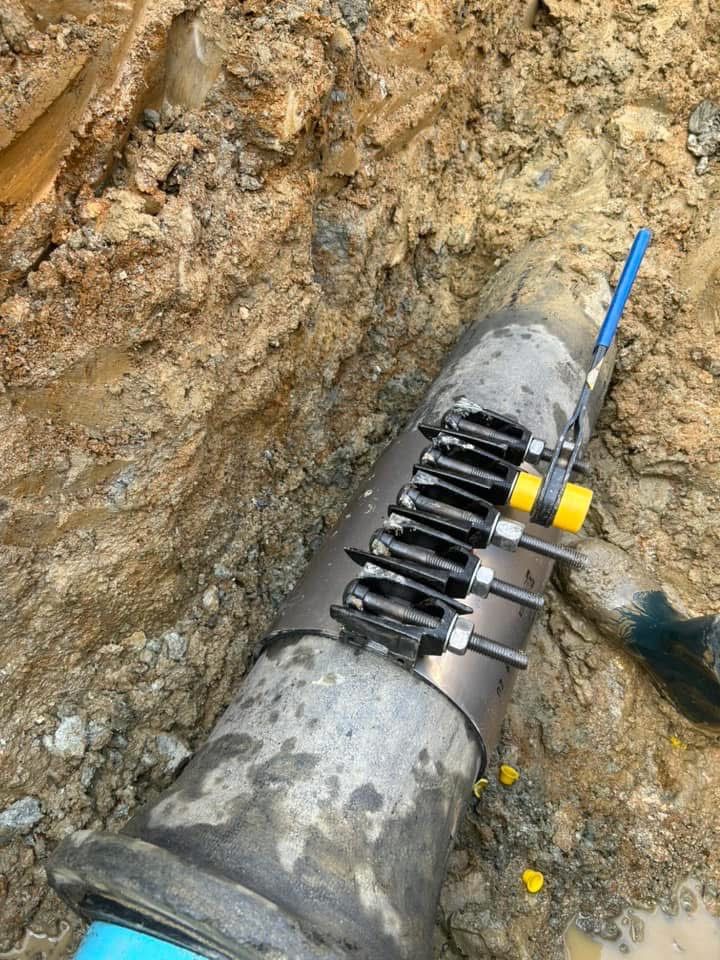
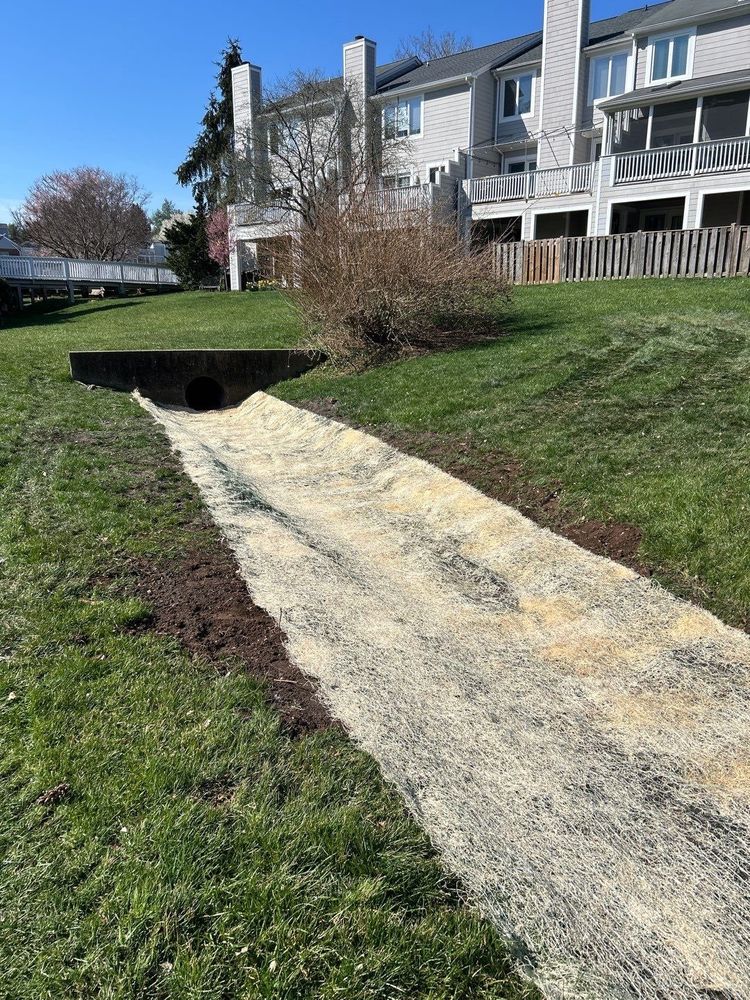
Notice how the second image highlights a dedicated sump discharge line that empties into a stabilized stone pad. This detail is crucial for Exterior drainage homes perched on slopes above their neighbors. Without splash blocks or energy-dissipating pads, water can erode soil and send sediment into community storm drains, triggering code violations. Properly anchoring pipes and protecting outlets keeps discharge steady, even during power outages when backup pumps engage.
If you manage a commercial plaza or industrial site in Exterior drainage, consider the following maintenance checklist:
1. Seasonal camera inspections. Video inspections each spring and fall verify that underground drains remain clear of silt. Crews can also evaluate nearby water mains to ensure they weren’t compromised by freeze-thaw cycles.
2. Flow testing after major storms. Document how quickly parking lots drain following a one-inch rainfall. If the time to clear increases, it could signal clogs or subsidence.
3. Gutter-to-ground coordination. Large roofs collect massive volumes of water. Splitting downspouts across multiple drains prevents overloading a single trench system.
4. Emergency response planning. Store contact information for trusted drainage and utility contractors. When a water main bursts or a drain collapses, rapid excavation and repair minimize downtime. Keep (443)-903-9018 on speed dial so the Shoreline team can mobilize immediately.
Beyond these steps, technology continues to reshape Exterior drainage. Smart controllers now regulate sump pumps based on radar data, activating before the first raindrop hits. Thermal imaging drones can spot saturated soil bands that aren’t visible from the ground, guiding crews to hidden leaks. Integrating these tools into routine maintenance helps property owners make data-driven decisions and budget for upgrades before emergencies strike.
Residents considering home renovations should coordinate with drainage experts early in the design phase. Whether you’re adding an accessory dwelling unit in Forest Hill or expanding a storefront in Bel Air, altering rooflines and hardscapes changes how water moves. Securing permits often requires hydrology calculations, and local inspectors will want proof that neighboring parcels won’t be affected. A comprehensive Exterior drainage plan speeds approvals and protects community relationships.
Finally, remember that drainage doesn’t exist in isolation. When you repair or install a commercial water main, adjust irrigation, or add new utilities, double-check that soils are compacted correctly and that trenches are backfilled with the right materials. Doing so preserves pipe integrity and prevents future settlement that could undermine drains or sidewalks.
For more details, visit our main Commercial Water Main Install & Repair page.
If you’re ready to fortify your Exterior drainage system—whether that means installing new French drains, coordinating with a water main project, or scheduling emergency service—call (443)-903-9018 and keep your property one step ahead of the next storm.